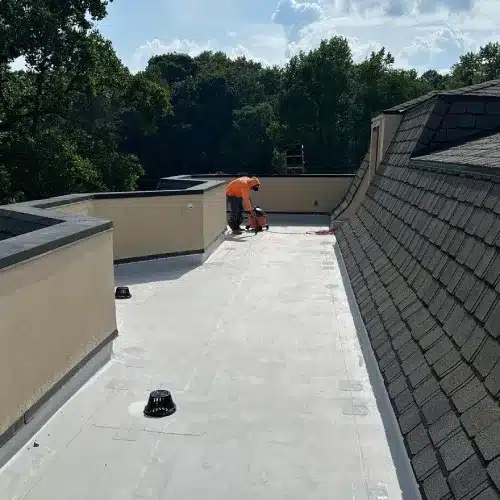
Aren’t Flat Roofs Only for Commercial Buildings?
No, flat roofs are no longer just for commercial buildings. Today, homeowners are choosing flat roofing for its clean style, strong performance, and long-term savings. The benefits of flat roofs include improved energy efficiency, easier maintenance, and better use of space. This guide explains the advantages, addresses common concerns, and helps you decide your next step.
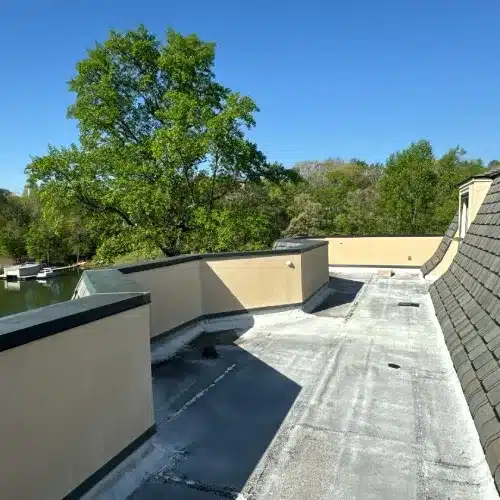
Are Flat Roofs a Smart Choice for Residential Homes?
Yes. When installed correctly, flat roofs are durable, energy-efficient, cost-effective, and ideal for modern residential construction.
Skyline Contracting installs flat roofing systems designed for long-term protection and performance. Learn more about our professional roof replacement services and how we evaluate whether a flat roof fits your home’s structure and goals.
Flat roofing today uses advanced materials such as TPO roofing and EPDM membranes. These systems are engineered to resist UV damage, temperature changes, and moisture intrusion. With proper installation and roof drainage, flat roofs perform reliably for decades.
Homeowners reading this guide will understand how flat roofs improve efficiency, simplify maintenance, and enhance modern home design.
Why Flat Roofing Works for Modern Homes
Flat roofs are a defining feature of modern home design. Their low-profile structure creates clean lines and a minimalist exterior.
Design and functional benefits include:
- Sleek architectural appearance
- Easier second-story additions
- Reduced framing complexity
- Lower material usage
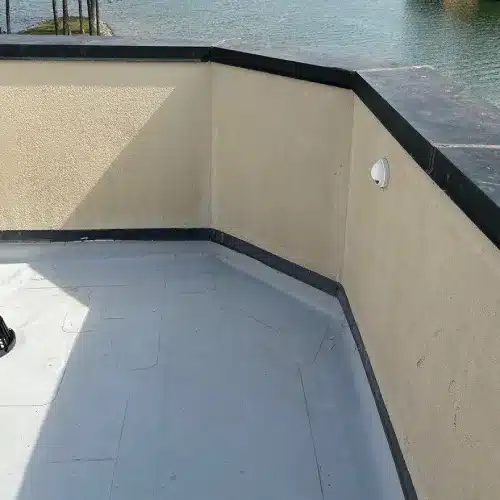
Urban and custom-built homes often use flat roofing to achieve a streamlined look. Without steep slopes, architects can design bold shapes and open layouts.
Flat roofs also reduce structural weight and framing requirements. This can simplify construction and improve cost efficiency.
For homeowners thinking about a residential roof replacement who want their property to feel updated and design-forward, flat roofing delivers both style and performance.
Energy Efficiency and Cost Savings in Georgia
One of the most important benefits of flat roofs is improved energy efficiency. Modern flat roofing systems often function as a reflective cool roof, meaning they reflect more sunlight and absorb less heat.
According to the U.S. Department of Energy, cool roofs can significantly reduce roof surface temperatures, lowering indoor cooling demands. This directly impacts energy costs during hot seasons.
Key efficiency advantages include:
- Reduced summer cooling bills
- Less strain on HVAC systems
- More consistent indoor temperatures
- Extended roof lifespan
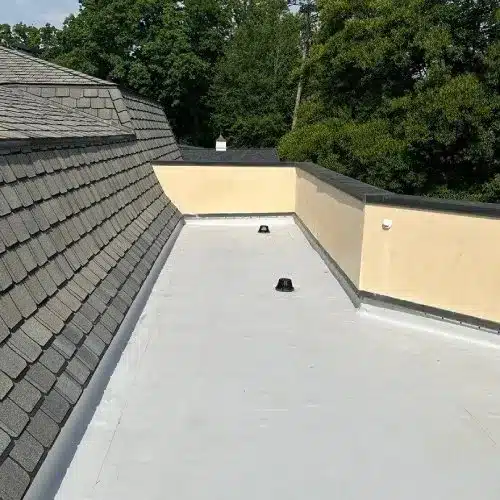
TPO roofing is highly reflective and helps bounce heat away from the home. EPDM provides strong weather resistance and flexibility in fluctuating temperatures.
Flat roofs also allow insulation to be applied evenly across the surface. Fewer angles mean fewer gaps. This reduces heat transfer and improves overall building performance.
For homeowners in Gainesville, Georgia, where summers are long and humid, this energy performance makes a noticeable difference.
Easy Maintenance and Accessibility
Maintenance affects roof lifespan. Flat roofs simplify inspections and service access.
Because the surface is level, professionals can safely walk across the roof. This allows Skyline Contracting to inspect seams, flashing, and drainage areas efficiently.
Maintenance advantages include:
- Easy cleaning of drains and gutters
- Direct HVAC access
- Faster minor repairs
- Safer inspection process
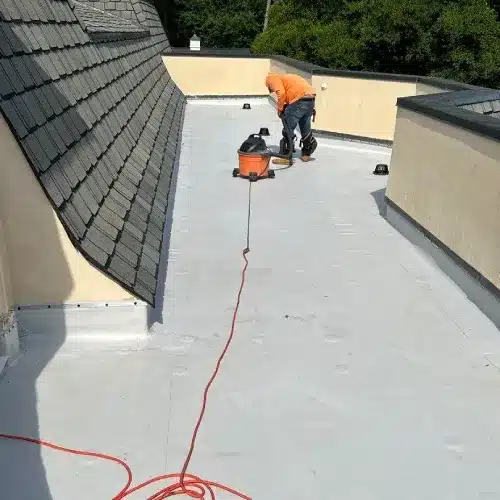
Proper roof drainage design ensures water flows toward designated drains. Despite the name, flat roofs are built with a subtle slope to prevent pooling.
Easier access means small issues can be identified early. Early detection reduces repair costs and extends the roof’s life.
Space Optimization and Modern Design
Flat roofs provide usable space that traditional pitched roofs cannot offer. This is one of the most overlooked benefits of flat roofs.
Homeowners can use flat roofs for:
- Rooftop decks
- Outdoor seating areas
- Solar panel systems
- Small rooftop gardens
These additions increase usable square footage without expanding the home’s footprint.
Flat roofs also support sustainability goals. Solar panels are easier to position for maximum sunlight exposure. Green roof elements can improve insulation and reduce surface heat.
For homeowners comparing options, our team can also explain how flat roofing compares with metal roofing systems to determine the best fit for your home’s design and efficiency goals.
By blending function and modern design, flat roofs help homeowners maximize both space and performance.
Common Myths About Flat Roofs
Flat roofs are often misunderstood. Modern materials and installation methods address most common concerns.
Do Flat Roofs Leak More Often?
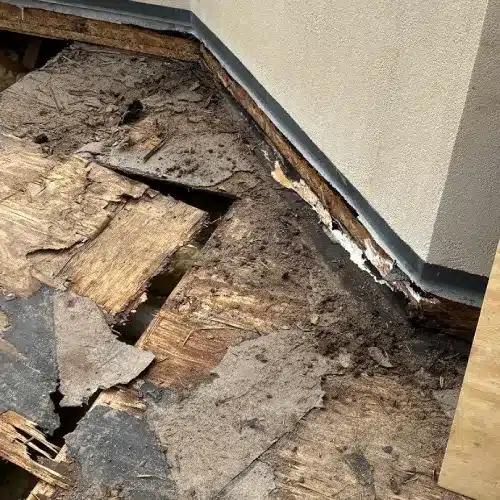
No. Leaks are usually caused by poor installation or lack of maintenance, not the roof style itself. When installed by professionals like Skyline Contracting, flat roofs are sealed with high-quality materials, including TPO roofing and EPDM membranes, which resist water intrusion and UV damage. Routine inspections and timely maintenance prevent most issues before they become costly.
Is Drainage a Major Problem?
No. Despite the name, flat roofs are not completely flat. Modern systems include subtle slopes and engineered roof drainage points to direct water safely away. Properly designed flat roofs prevent pooling and standing water, which eliminates the main source of concern for homeowners in humid climates like Gainesville, Georgia.
Do Flat Roofs Have a Short Lifespan?
No. With materials like TPO roofing and EPDM, flat roofs can last 20–30 years or more. Lifespan depends on professional installation and regular maintenance, such as cleaning debris, checking seams, and ensuring drainage systems remain clear.
Can Flat Roofs Handle Georgia Weather?
Yes. Properly installed flat roofs perform well in heat, heavy rain, and seasonal storms common in Gainesville, Georgia.
Understanding these facts helps homeowners make informed decisions based on performance rather than outdated assumptions.