
What Does a Commercial Roof Inspection Checklist Include?
A commercial roof inspection checklist includes a full evaluation of the membrane, flashing, drainage, rooftop equipment, and interior areas to identify leaks, wear, and structural concerns.
A strong roofing system is one of the most important lines of defense for any commercial building. To keep that protection reliable year-round, commercial roofs need routine inspections that catch early signs of damage before they turn into costly repairs. This is especially important in Gainesville, where heat, humidity, and frequent storms can accelerate wear on even the best materials.
A thorough commercial roof inspection checklist brings structure to the process, ensuring every part of the roof, from the membrane to the drainage system, is evaluated with the same level of detail. It’s far more than a quick look at the surface; it’s a full assessment of the components that keep your building dry, efficient, and compliant.
Below, we break down what professionals like our team at Skyline Contracting evaluate during each inspection and why these checks are essential for long-term roof performance.
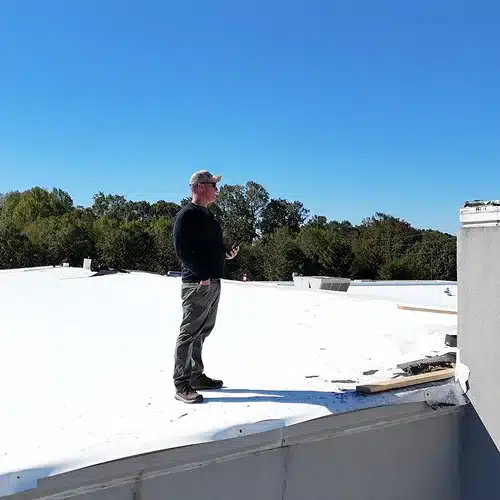
Why Regular Commercial Roof Inspections Matter
Prevent Costly Leaks & Structural Damage
When roofing materials weaken or tear, water can slip into insulation, walls, and electrical systems. What starts as a small puncture or clogged drain can turn into mold growth, damaged ceilings, or structural rot. Routine inspections catch these issues early and prevent extensive repair bills.
Maintain Warranties & Insurance Compliance
Many roofing manufacturers require scheduled inspections to keep warranties valid. Similarly, insurance claims for storm damage may be denied without proof of regular maintenance. A documented inspection record protects your investment and simplifies the claims process.
Designed for Gainesville’s Climate
Gainesville sees heavy summer storms, high humidity, and year-round sun exposure. All of these conditions put unique pressure on commercial roofing materials. Membranes can blister, flashing can lift, and drainage systems can clog more quickly than in drier climates. Regular inspections help stay ahead of climate-related risks.
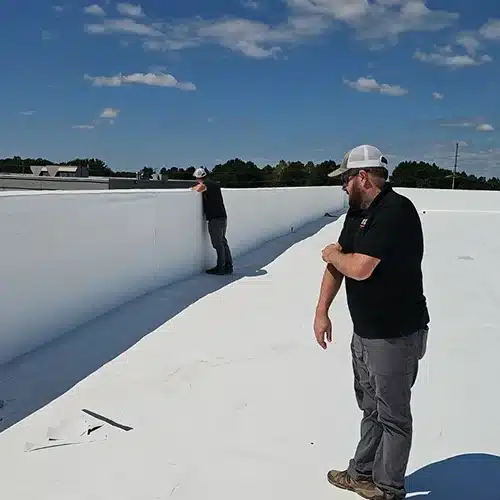
Key Areas We Inspect for Proactive Commercial Maintenance
A thorough evaluation requires looking at every component above and below the roof’s surface. Our commercial roof evaluation covers several critical roof inspection points to ensure full system performance.
1. Membrane & Roofing Surface
The membrane is the outermost protective barrier of your commercial roof. During every inspection, we assess:
- Cracks, tears, or punctures
- Signs of UV degradation
- Loose seams or bubbles (blistering)
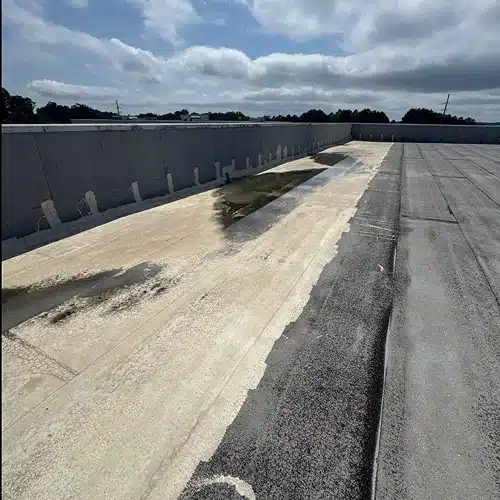
- Ponding water areas
- General wear on TPO, PVC, EPDM, metal panels, or modified bitumen
Surface damage is one of the leading causes of leaks, making this one of the most important inspection steps in the process.
2. Flashing, Edges & Perimeters
Flashing seals the areas where roofing materials meet walls, edges, HVAC units, and other structures. These are also the most common entry points for water intrusion.
At Skyline Contracting, we check for:
- Loose, cracked, or deteriorated flashing
- Gaps or separation at edges
- Improperly sealed transitions
- Damage caused by storms or expansion/contraction
Tip: Proper flashing ensures waterproofing across an entire commercial building, not just the surface.
3. Drainage Systems
Drainage is an essential component for maintaining roof health. Even a small amount of standing water can accelerate membrane wear, attract debris, and lead to leaks.
Drainage checks include:
- Gutters and downspouts
- Internal drains and scuppers
- Debris blockages
- Signs of long-term ponding
- Loose or damaged drain components
We also look at how the building’s slope supports drainage, which is often overlooked in commercial roof assessments.
4. Rooftop Equipment & Penetrations
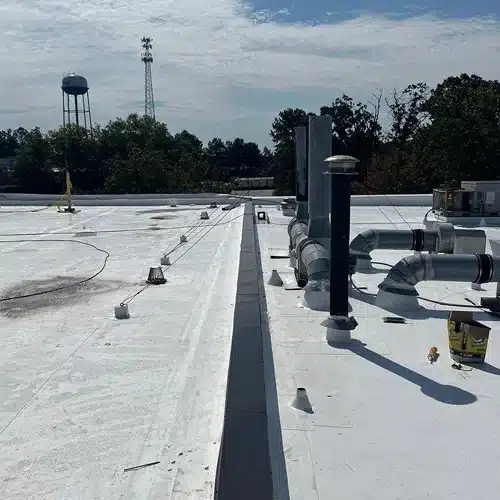
HVAC units, skylights, vents, solar panels, and roof hatches are necessary for building operations, but they can also create weak points.
Our team inspects:
- Seals and curbs around equipment
- Rust or corrosion
- Loose mounts or damage caused by vibrations
- Worn gasketing or flashing
- Cracks around skylights
Because these penetration points are so common, they’re always included in our commercial roof inspection checklist.
5. Interior Ceilings & Insulation
A complete inspection doesn’t stop on the roof. Water damage often shows up inside long before surface issues are obvious.
Interior checks include:
- Water stains on ceilings or walls
- Musty odors (possible mold)
- Damp insulation
- Discoloration around vents or pipes
By pairing interior and exterior evaluations, we can diagnose issues more accurately and recommend the right repairs.
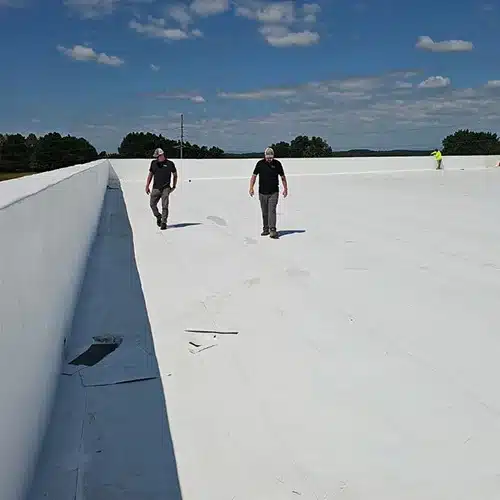
Common Red Flags We Identify During Inspections
Every roof is different, but several issues show up consistently across commercial properties. Our inspections are designed to spot these early warning signs before they become expensive repairs.
- Pooling or standing water
- Clogged drains or gutters
- Cracked, punctured, or shrinking membrane
- Loose flashing or edge metal
- Debris buildup from storms or tree limbs
- Open seams or blisters forming beneath the membrane
- Rust or corrosion on metal components
- Early signs of mold or algae growth
- Interior water stains or soft ceiling spots
Spotting these red flags early helps avoid sudden leaks, property damage, or system failure.
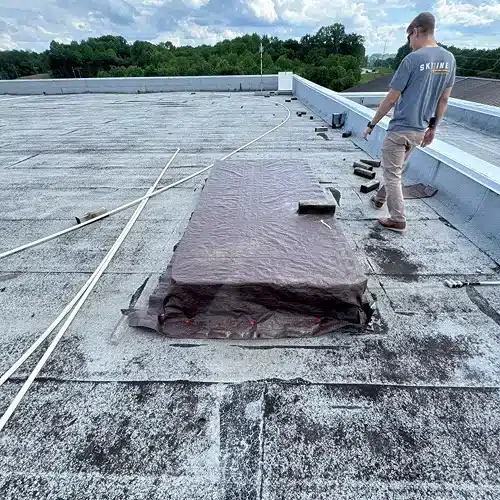
Why Professional Inspections Are Essential
Expertise You Can’t Get With DIY Checks
Commercial roofs are complex systems. Walking on a roof without proper training is dangerous, and without the right tools, many issues are simply invisible to the untrained eye. Professional roofers use moisture meters, thermal imaging, and proven techniques that ensure small problems aren’t missed.
Accurate Reporting for Your Records
A professional inspection includes documentation, photos, and recommendations that help with:
- Insurance claims
- Warranty compliance
- Long-term maintenance planning
- Budgeting for repairs or replacement
Having an official record protects your business in the long run.
Saves Time & Prevents Disruptions
Unexpected leaks or equipment failures can shut down operations. Frequent inspections reduce the likelihood of emergency repairs and keep your building running smoothly.
Local Service You Can Trust
Skyline Contracting is proud to serve the Gainesville business community. We are locally owned and operated, and our team knows how Georgia’s weather impacts roofs and what signs indicate future problems. We help commercial property owners stay ahead of maintenance, before minor damage turns into major repairs.
FAQs About Commercial Roofing Inspection
How often should I schedule a commercial roof inspection?
Most commercial roofs should be inspected twice a year. This is typically in the spring and fall. In storm-heavy areas like Gainesville, additional inspections may be recommended after major weather events.
What’s included in a commercial roof inspection report?
Your report will include photos, notes on the roof’s condition, and documentation of any damage or moisture concerns. It also outlines recommended repairs and a prioritized list of next steps.
How long does a commercial roof inspection take?
Most inspections take between one and two hours, depending on roof size and equipment. Larger facilities or roofs with multiple penetrations may require additional time.
Ready to Protect Your Gainesville Building? Schedule an Inspection.
A complete commercial roof inspection checklist gives you peace of mind and ensures your investment lasts longer. Whether your building is aging, recovering from a storm, or simply due for a routine evaluation, regular inspections are the smartest way to maintain performance and avoid unexpected repair costs.
Schedule your commercial roof inspection with Skyline Contracting today to protect your building and stay ahead of unnecessary and costly roof issues in the future.